

en

en



Anno 117: Pax Romana faces a unique set of technical challenges when it comes to rendering its highly dynamic world. Visuals range from overlooking entire cities to observing tiny details in the daily activities of their residents, and all of it is built by the player. This talk provides an overview of key engine improvements that were made during the development of Anno 117 and how these helped shape the look of the game. In particular it will cover how complex assets like buildings are optimized while being adaptive to uneven terrain and how Raytracing was implemented to facilitate the flexibility and scale required by an Anno game.
This technical and creative session explores the complete workflow of building authentic, resizable cultural clothing for MetaHumans in Unreal Engine, using a production wardrobe asset developed for Fab as a real-world case study.Starting from cultural references and garment design, we will look at how silhouette, proportions, layering and material behavior are translated into a digital garment while preserving its visual identity. The session then moves into the technical pipeline: preparing the garment for MetaHuman, building a resizable outfit that works across different body proportions, setting up Chaos Cloth simulation, weight maps and constraints, and balancing believable fabric behavior with real-time performance.Rather than showing only the final result, the talk will examine practical production challenges and failure cases—including clipping, deformation, unstable simulation, loss of silhouette and resizing limitations—and how these problems can be approached.The goal is to connect artistic decision-making with Unreal Engine’s real-time character and cloth systems, and show what it takes to turn a culturally authentic garment into a flexible, production-ready digital wardrobe asset.
As hardware costs rise and players keep older devices for longer, optimizing games is increasingly important, not just for performance, but also for reach and competitiveness. This panel with experts from Kolibri Games and Byte Rockers will explore how studios can make their games run efficiently across a wider range of hardware, extending access to players while reducing energy consumption. Speakers will share hands-on tools, techniques, and real-world examples that studios can use to optimize their games.
The key takeaway: better energy efficiency often means better performance, smoother gameplay, and a better player experience.
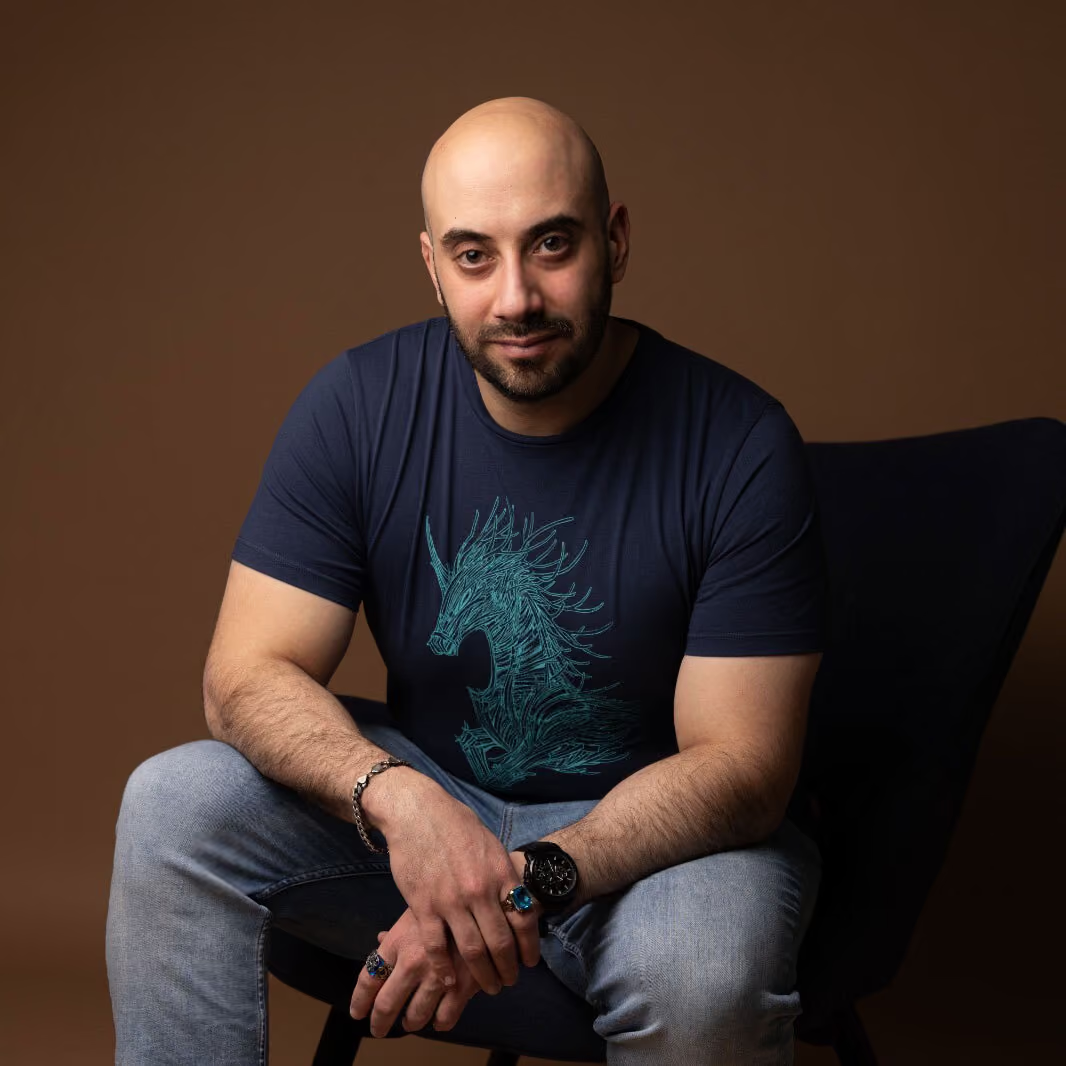
As artificial intelligence becomes an ever-present collaborator, the question is how we, as humans, can remain authentic in our own creativity. In this talk, Fawzi Mesmar uses his framework of creative sobriety: a method for cutting through noise, reclaiming originality, and cultivating ideas in ways no machine can. He will also explore our responsibility as creators: to ourselves, to our industry, and to the audiences we serve while confronting the creative dilemma: the truth that creativity demands vulnerability, and the courage to move forward in spite of fear. In a world where AI is everywhere, and existential threat to many crafts people is around the corner, staying true to your vision armed with authenticity is still uniquely human.
Exploring an unknown world, discovering its many secrets and walking the fine line between terror and fascination have been strong pillars of Subnautica 2's design.
We will cover how creatures in Subnautica 2 are designed to support these pillars, and how the process is an exploration itself. Discovering what a creature is together as a team, much like players would later discover these creatures for themselves in the game. Using real examples from the game, we follow the process from ideation and concepting to prototyping and implementation - and we also learn about how to navigate when major project requirements change, or designs simply do not work out.
This talk is aimed at anyone interested in some of the creative processes behind Subnautica 2, and many of the lessons learned apply well beyond creature design!
This panel explores how game developers and studios can navigate the growing landscape of AI tools and service providers, considering digital sovereignty, transparency, data ownership, and creative independence. Participants will gain a better understanding of available tools, their trade-offs, and key criteria for making more informed decisions.
Whether you're starting a new game developer community or helping an established one thrive, building a successful community takes more than bringing people together.
In this interactive workshop, we'll explore how to build, grow and support game developer communities, with a particular focus on creating safe, welcoming and inclusive environments. Through shared experiences and practical discussions, we'll examine what works, what doesn't, and how community organizers can navigate challenges, build trust and ensure their communities remain places where everyone feels they belong.
How is Rovio turning a 134 years old game initially made for web into a high profit Live Ops driven game.
What happens when traditional filmmaking meets the ultimate interactive medium? Join industry veterans from CD PROJEKT RED and 2K (Cyberpunk 2077, Witcher 3: Wild Hunt, Mafia: The Old Country) for a nuanced, lively debate on the delicate balance between passive and active entertainment.Far from being a simple "chill" experience, crafting cinematics in video games means constantly bridging the gap between linear storytelling and player interactivity. Together, our speakers explore the complexities of player agency: How do choices and branching narratives alter emotional impact? Does giving players too much control dilute the creative vision, or does it deepen ludonarrative resonance? From the psychological weight of voiced versus silent protagonists to the unique challenges of writing stoic characters and handling player-driven flow states, this session dives deep into the architecture of modern game storytelling.Whether you're a developer, writer, or cinematic artist, come rethink how we design narrative tension when the audience holds the controller.
How can games help us understand experiences different from our own and turn that understanding into action? Inspired by Psyon Games’ award-winning FULL ADHD, the panelists explore the connections between lived experience, game design and better leadership. From authentic representation to practical improvements at the workplace, the discussion asks how games can challenge assumptions, foster inclusion and support health awareness - in the games industry and beyond.
Self-publishing is the new go-to market strategy for many game studios. From fresh start-ups, to seasoned Indies, to AA and AAA. Kickstarter plays a vital role for many games in this trend. We will explore based on data and insights why a small campaign also helps, how to make a big campaign and where a clear profile of both, studio and IP, come in.That said, there will be plenty of time for a gamified Q&A, so bring your questions and get ready for some fruitful discussions
Burnout remains a pervasive issue across the games industry, no matter one's role or seniority. In the 2026 Salary & Satisfaction report by Skillsearch, 67% of respondents had experienced excessive stress or burnout in the last year. In the most recent Ukie census, 29% of respondents reported working over 50 hours in a week at least once in the last 12 months. This session looks at how individuals can support themselves and their colleagues in implementing healthy work practices, as well as highlighting practical, individual tools to combat burnout and navigate occasions where our workloads are heavier.
Learning Objectives:
- Understand what 'burnout' means, and how it differs from stress
- Recognise common contributing factors to burnout and crunch behaviours (both inside and outside of work)
- Understand how passion can increase risk of burnout
- Spot the signs of burnout before they become an issue
- Learn practical tools for addressing burnout symptoms when they arise
Your Discord server isn't just a community, it's a development tool. This talk walks through building a server that works for you at every stage of your game's development. We'll talk about channels, roles, events, moderation, and how to bring players from your game into your community and keep them engaged.
From ‘just mute them’ to measurable cascading safety - what actually changed in the first 90 days after we turned on live voice moderation.
Developing and porting a game to multiple platforms and storefronts can significantly increase your userbase, but it does not come for free.
In this talk, I will share stories, business considerations, tips and pitfalls, and advanced techniques that will help you decide where to launch your game, delivering an optimised experience tailored for each platform and audience.
Hiring in the game industry looks different today than it did just a few years ago. Increased competition and shifting priorities have changed what studios expect from candidates at all levels.
Drawing from experience in Talent Acquisition across gaming in Europe, this talk explores how the “bar” for talent has evolved. I’ll share common patterns I see in applications and interviews, why strong candidates are often overlooked, and what developers can do to better align with current expectations.
A developer-led conversation on bringing voice chat and moderation into a live game, from the perspective of a studio that knows it matters and wants to get it right.
Delving deep into theory and practice, and drawing from 5+ years of experience crafting modular narrative systems, this talk explores how designers can create truly responsive narrative worlds without a combinatorial explosion of content. In addition to general best practices and examples from successful game designers as well as the speaker's own work, the talk demonstrates how anthropologist Claude Lévi-Strauss's structuralist study of myths in the previous century can prove surprisingly helpful in designing flexible game narrative systems that remain coherent and provide variable consequences as they modularly adjust to players' choices. Achieving great narrative flexibility and freedom with finite content is the holy grail of IDN, and this talk outlines practical strategies and tricks for providing players the experience of such freedom with a limited content budget.
Set sails into the uncharted waters of Limbic’s pirate city-builder Corsair Cove!
Together, we'll explore how unique vertical placement mechanics shaped the island and building design, how an ocean shifts your artistic priorities, why there are pigs everywhere and how to make it all happen with a small team.
In this experimental format, one of our game prototypes get's tested live by a blind gamer. Get a unique insight into a completely different playstyle where sounds and haptics are your best friends and the screenreader guides you. Is it possible to play the game? Let's find out!
Rami Ismail will spar with the audience about the most critical things to know in (independent) game development, the things you've always wondered about, and the things you didn't realize you should wonder about.
A conversation about supporting the wellbeing of moderators and community managers, highlighting the importance of mental health and support for the people who keep gaming communities running.
A panel focused on publishing. More info TBA
You're about to release a game. The concept art started as a prompt, an NPC chats freely with players, and your publisher wants a warranty on the code. Can you actually ship this?
In this hands-on legal speedrun your team plays through four levels. Each level starts with a short legal briefing from us; then your team applies it to the asset list of a fictional indie game: AI concept art, a cloned voice, generated music, a chatting NPC and more. Level by level you work out who owns AI-generated assets and code, what voice cloning requires, how to fill in Steam's AI disclosure and what the EU AI Act adds on top. Finally you will draft an AI policy for your own studio. The final boss is a red-flag hunt. You leave with a checklist and a policy template.
General information, no individual legal advice.
Make sure to REGISTER via this form to secure a spot: https://app.guestoo.de/public/event/2cce3337-27fa-401b-8259-2476262a6d16?lang=en
Whether students or professionals, teamwork is one of the biggest challenges. Creative conflict is what drives discovery of best solution, yet we frequently err on the side of conflict avoidance, which in time can lead to resentment. On the other side is mishandled conflict which has gone too far and starts feeling personal, risking burnout.
This talk is an insider perspective on conflict and how we all can become a bit better at normalising and handling creative conflicts, and not letting them get personal.
From entering the industry to founding and leading a studio, women in games face different challenges at different stages of their careers. What support is available to help them thrive, and what still needs to change?
Bringing together representatives from Womenize!, Women in Games France, a French studio director and an emerging talent from the German games ecosystem, this panel will explore women's professional journeys, the support structures available in both countries, and the role of industry networks in creating lasting opportunities.
Organised by Institut français Germany, this discussion will examine what each ecosystem can learn from the other, how cross-border collaboration can strengthen existing initiatives, and what studios, institutions and industry stakeholders can do to build a more inclusive and sustainable games industry.
This section breaks down the success of FULL ADHD through two design lenses we use at Psyon Games: the learning loop and the narrative loop. Together, they help explain how the game became engaging, emotionally resonant, and effective at changing how players understand ADHD, earning recognition across the game, marketing, and pharmaceutical industries.
Many teams still make early design decisions based on pre-segmentation: “This appeals to new players focusing on social gaming” “this is more for casual players,” “the returning audience wants more of this challenge,” or “core gamers will understand it instantly.” The problem is that these segmentation labels often create false confidence and lead to costly misjudgments in tutorial design, pacing, UI complexity, and feature prioritization.
Once that happens, game-tests stop being a tool for discovery and become a way to project prefabricated assumptions, protect hierarchy, and create artificial momentum.This talk shows how qualitative, psychologically informed game-testing helps teams move beyond assumptions and read e. g. the emotional reality of player experience. Starting with short real-world case examples, we will demonstrate how apparently solid audience assumptions can lead to wrong design decisions — and how emotional- and motivation focused analysis reveals the actual source of friction, uncertainty, or engagement before teams spend time and budget on the wrong solution.


MEMBER OF: